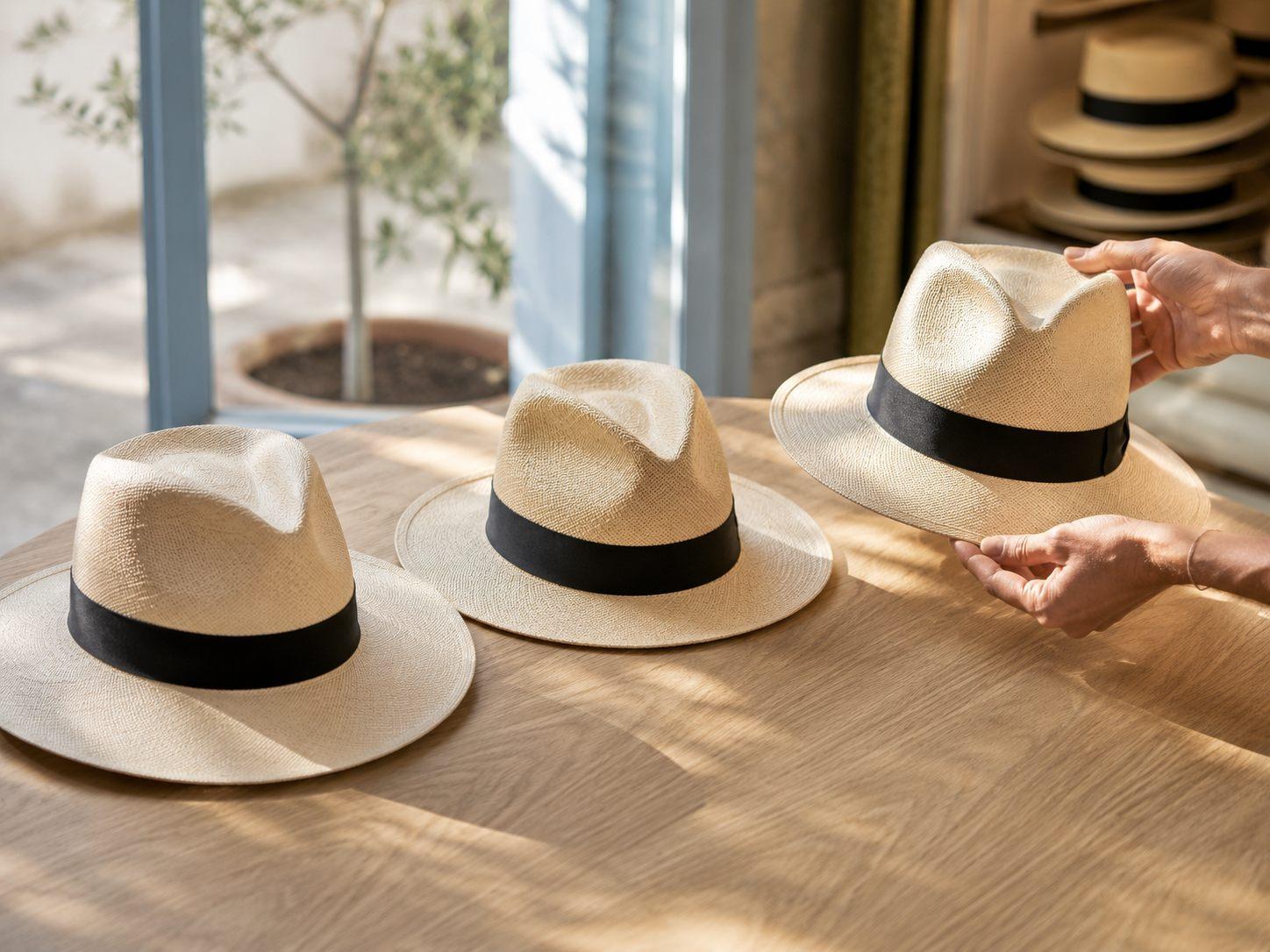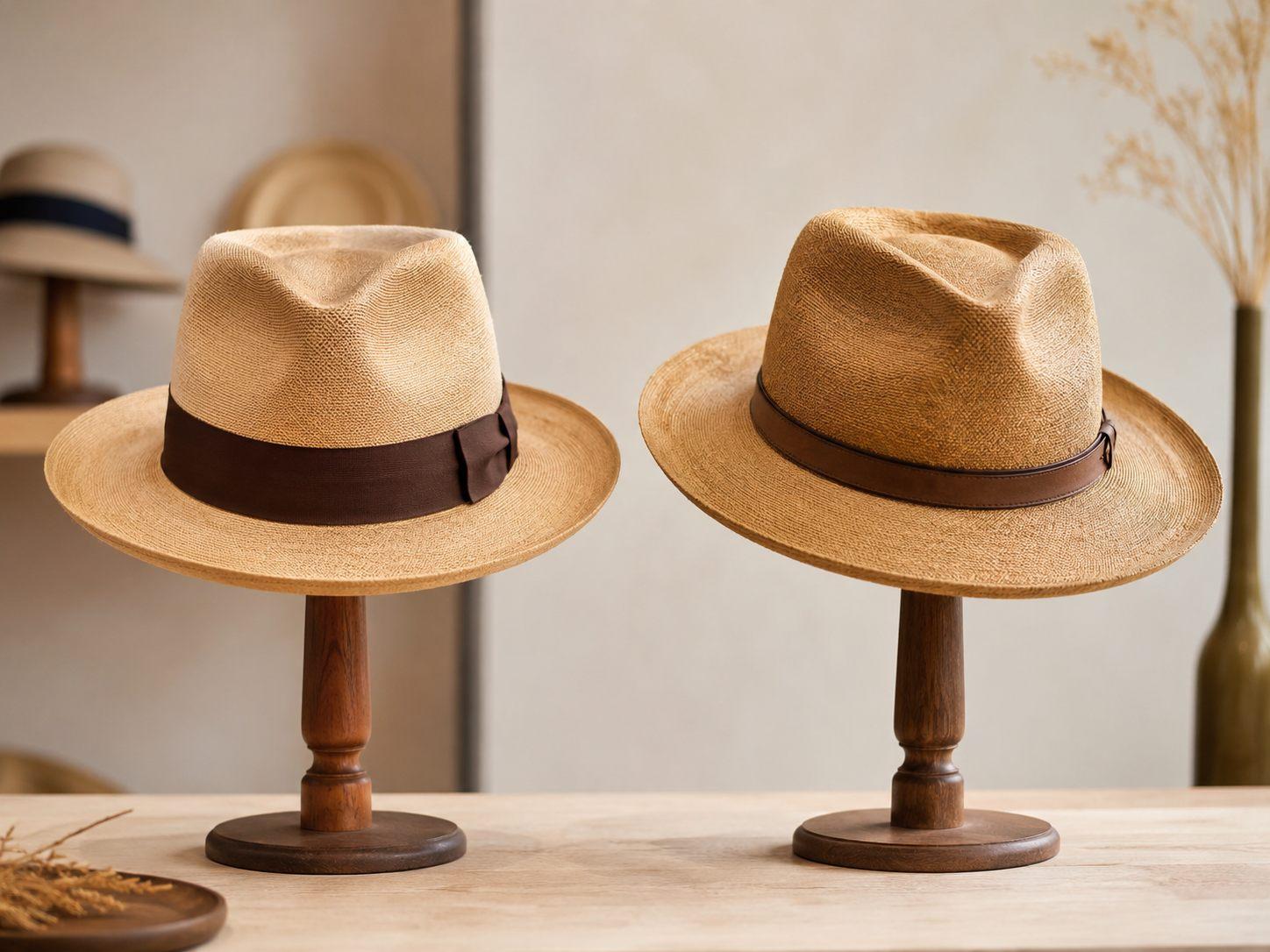
At first glance they look alike: a dented crown, a brim all the way round, a ribbon to underline the line. Yet the fedora and the traveller do not tell the same story. One is a monument of the classic wardrobe, the other a free spirit cut out for the road.
The fedora, a structured classic
The fedora is recognised by its crown, creased along its length and marked by two pinches at the front, and by its medium-width brim, often turned slightly down at the front. It is the hat of assertive silhouettes: it structures the face, lengthens the line and dresses a winter coat as readily as a summer cloth.
Its hold comes from its blocking: the shape is set, meant to be kept. You put it on, adjust it with a single gesture, and it keeps its bearing all day long. In return, it likes to be handled with a little consideration and prefers to travel on the head rather than at the bottom of a bag.
The traveller, the nomadic spirit
The traveller, for its part, cultivates suppleness. Its crown is softer, its brim often a little freer, and its material chosen to accept the handling of everyday life. Some supple models will even tolerate being gently rolled for the length of a journey, before regaining their shape with a flick of the hand. Always ask your hatter for advice before attempting it: not every material allows it.
It is the hat of impromptu departures, café terraces and country lanes. Less formal than the fedora, it gives a simple outfit an extra measure of character without ever looking contrived.
So which one to choose?
Ask yourself a single question: will your hat live mostly in town, set down with care, or everywhere with you, without ceremony? In the first case, the fedora holds out its ribbon. In the second, the traveller is made to follow you. And if you are still hesitating, the fitting will settle it: in the end, it is always your face that chooses.