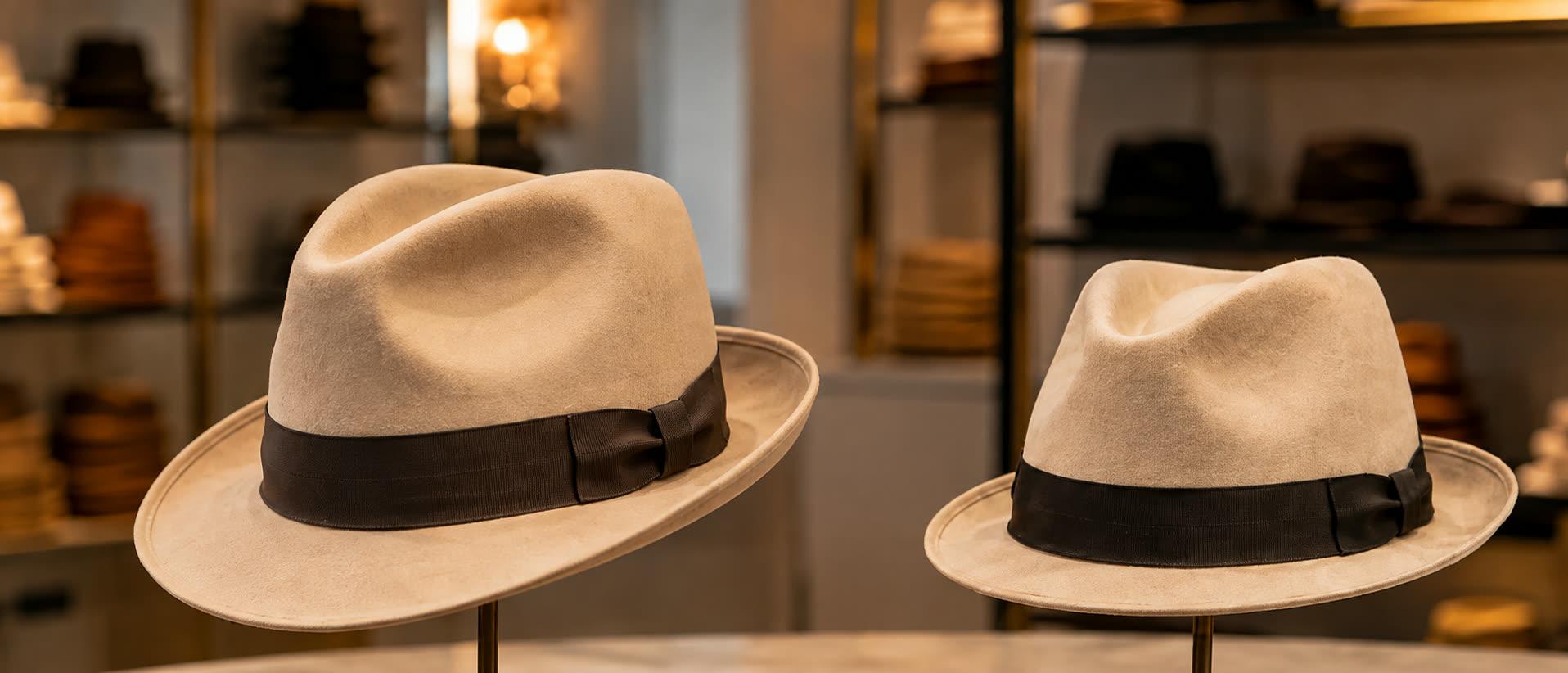
The fedora and the trilby share the same architecture: a crown pinched at the front and creased along the top, with a brim all the way round. The confusion ends there, for once they are set side by side, the difference leaps to the eye.
What sets them apart
- The brim: medium to wide on the fedora (often 6 centimetres and more), short on the trilby (4 to 5 centimetres), with the back distinctly turned up.
- The crown: taller and fuller on the fedora; lower and more tapered on the trilby.
- The wear: the fedora sits fairly straight or barely tilted; the trilby is happily worn pushed back, opening up the forehead.
- The style: the fedora leans towards the classic and an assertive elegance, the trilby towards ease and an urban spirit.
Which one to choose?
The fedora is the more versatile of the two. Its brim gives real protection from the sun and light rain, and it goes with a coat as easily as with everyday clothes. It is the natural choice for a first felt hat, and it particularly flatters round or heart-shaped faces thanks to its structured crown.
The trilby, with its short brim, is more a piece of style than a shelter. It suits fine, long faces and slighter figures, and those who find wide brims intimidating. In woven straw it becomes an excellent summer companion, easier to live with than a large panama in narrow streets or on public transport.
One last criterion, too often forgotten: your height. A wide brim makes a hat look larger; on a small frame it can overwhelm the silhouette, where a trilby respects it. Conversely, a trilby on a broad build can look perched. Try both in a full-length mirror, not just from the waist up.
The fedora dresses, the trilby accompanies: two ways of wearing the same family of hats.