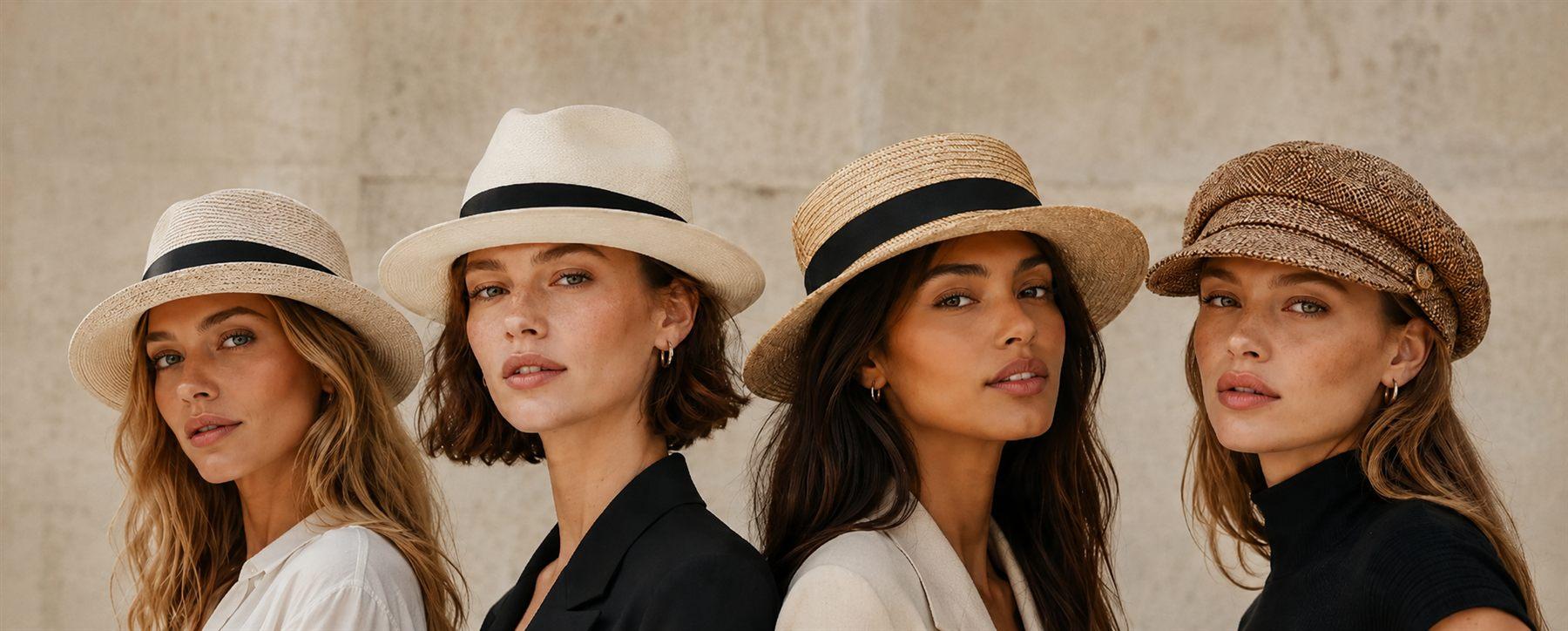
We often hear people say that hats do not suit them. In reality, it is almost always a matter of shape: a model badly proportioned to the face, and the charm evaporates. The right reflex is to think in terms of contrast, looking for what the hat can balance.
Identifying your face shape
In front of a mirror, hair drawn back, look at three things: the width of the forehead compared with the jaw, the length of the face compared with its width, and the line of the chin. The classic distinctions are the oval, round, long, square and heart-shaped face. No need for millimetre precision: a general tendency is enough to guide the choice.
The pairings that work
- Oval face: almost everything suits it, from the fedora to the capeline. Take advantage and choose according to use.
- Round face: favour high crowns and angular lines (pinched fedora, trilby) that lengthen the face; avoid very round shapes worn pulled down.
- Long face: a medium to wide brim and a low crown restore balance. The bucket hat and the capeline are good allies.
- Square face: soft brims and curves soften the angles — cloche, capeline, bucket hat in washed cloth.
- Heart-shaped face: a medium brim, worn at a slight tilt, tempers the width of the forehead.
How a hat is worn counts as much as its shape. The same bucket hat changes entirely depending on whether it sits straight, tilted back to open up the face, or slightly to one side. Take the time to try several angles before concluding that a model does not suit you.
One last point of reference: glasses, a beard or the length of your hair change the picture. A round face framed by long hair carries a soft brim very well; the same face with short hair will prefer a more structured crown. The full-length mirror, which shows the whole silhouette, remains the best judge.
You do not choose a hat to hide a face, but to bring it into the light.